|
|
Tweet | Follow @warworlder |
 |
 |
 |
|||||||||||||||||||
|
|
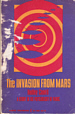
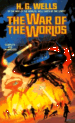
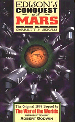
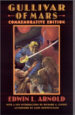
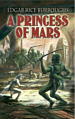
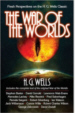
Books of Mars, Part 1In 1898, Herbert George Wells wrote what is arguably the most important novel in the history of science fiction. The War of the Worlds established a lasting benchmark for a whole subset of the genre, that of the alien invasion of Earth. But just as the Martians have journeyed here, so too have we engaged in flights of fantasy there, and could even Wells have imagined the wonders that our robotic ambassadors are now uncovering? The way science has viewed the red planet has been integral to the development of the fictional Mars, and it is perfectly possible to trace how literature has changed along with our scientific understanding. Equally, it is also fair to argue that if not for the intense interest in creating fictional Martian landscapes and the way these worlds have captured the public imagination, we might not have expended so much effort and resource on attempting to visit this distant world. If we ever land a man or woman on Mars, it will be in large part thanks to the legacy begun by H.G. Wells. The War of the Worlds has enjoyed an astonishing longevity. When Wells wrote it, I am sure that even he, the great predictor, would I have been stunned at how quickly his story struck a chord and was endlessly re-adapted for new audiences. It seems that The War of the Worlds has an organic and timeless quality that makes it ripe for such re-imagining. When Wells wrote The War of the Worlds, it was common practice for a novel to be first serialised in popular magazines. Hence in the UK the story first appeared in Pearson's Magazine, and was serialised in the United States in the pages of Cosmopolitan Magazine; not the health and beauty Cosmopolitan of modern times, but a far more erudite publication whose broad remit included journalism, serious comment and stories from some of the best known writers of the age. The book in its complete form was published in 1898, but it was only a few months after The War of the Wars had been serialised in Cosmopolitan that a revised (and wholly unauthorised) version began publication in the pages of the Boston Post newspaper. Fighters from Mars took the original text and crudely dismembered it into a shorter version, switching English place names for equivalents in and around Boston. It is an extraordinary oddity, and one that proved so popular that it spawned a sequel, even more outrageous in intent, called Edison's Conquest of Mars. This would see the inventor Thomas Edison lead an invasion fleet to Mars to seek retribution for the Martian attack. Written by a noted popular science writer of the time, it deserves a place in science fiction history not only for the audacious nature of the project, but also for many firsts in the genre, such as space-walks and asteroid mining. But Mars had been a fictional destination before Wells chose to unleash his invasion. Percy Greg in his 1880 novel Across The Zodiac took his traveller to Mars by antigravity, discovering a Martian civilisation and becoming embroiled in a clash of ideologies. Like most of the works prior to Wells, the Mars imagined by writers was relatively benign, such as Robert Cromie's A Plunge into Space which found a utopia and Gustavus Pope, who also imagined the planet to have solved the vexing problems of human existence. Like Cromie, the hero of Pope's Journey to Mars also found romance on the red planet. Only the German author Kurd Lasswitz offers any kind of aggressive Martian contact prior to The War of the Worlds, and even then, his invaders are essentially benign, imposing peace on an unruly Earth, and not surprisingly, working in another interplanetary romance. However, though one hesitates to call it an invasion novel, the Martians in his 1897 novel Auf zwei Planeten (Two Planets) do knock the stuffing out of the British Navy. From the very first writings on Mars, the vision of the planet has waxed and waned with scientific thought and understanding. The influence of the astronomer Percival Lowell cannot be over-emphasised and indeed his scientific papers on the subject are science fiction in all but name. He envisaged a Mars of globe spanning canals built by a dying civilisation, and this view held sway for years and clearly influenced Wells and his War of the Worlds. For other authors, Mars became a place for daring and resourceful men, beautiful princesses and heroic quests. Lester Arnold flew his hero to Mars on a flying carpet in Lieut. Gullivar Jones: His Vacation (1905), where he fights for the American way and claims a large chunk of the planet in his nations name. In contrast to the dying world proposed by Lowell, Arnold's Mars was a verdant and plentiful land, but one author who did take Lowell to heart created the greatest of all the Martian adventurers, though Gullivar Jones was surely an influence. |
ReviewsMore book reviews in Part 2 >
More book reviews in Part 2 > |
|||||||||||||||||||




home - books - comics - film - gallery - links - mars - music - news - radio - shop - timeline
about - advertise - contact - privacy