|
|
Tweet | Follow @warworlder |
 |
 |
 |
|||||||||||||||||||
|
|
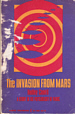
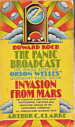
Books of Mars, part 2John Carter of Mars was the creation of Tarzan's Edgar Rice Burroughs. Like Arnold, Burroughs had little interest in the physical plausibility of his hero's translation to Mars. Arnold flew him by magic carpet, Burroughs has his hero fall asleep and travel by astral projection. What he finds on Mars in the first novel, A Princess of Mars (1912) and the adventures that followed in later books, is a Mars of stark contrasts. Breathtaking beauty and ugliness go side by side in a society of glamorous princesses, hulking monsters and dying civilisations, all competing for the dwindling lifeblood of a planet. The John Carter novels are purest high adventure, with a literal superhero (Carter has massive strength thanks to the low gravity of Mars) facing fantastic odds to win the hand of the beautiful Martian princess. But by the early 1930's the fantastic Mars of Burroughs and Arnold was under increasing threat, both from the vociferous scientific debate on the likelihood of life on Mars, and from a new breed of science fiction writer who placed greater emphasis on the realism of their stories. One of the first such stories was A Martian Odyssey by Stanley G. Weinbaum. Published in the July 1934 issue of the pulp magazine Wonder Stories, this is a wonderful short story about an astronaut encountering a bewildering variety of indigenous Martian life forms. Also of great influence was John W Campbell Jr, the editor of the primary marketplace for science fiction writers at the time, the magazine Astounding Science Fiction. Campbell strongly encouraged greater realism from his writers, giving rise to stories such as P. Schuyler Miller's 1944 offering The Cave, a grim little tale that puts a human presence on Mars firmly in its place. We may know how to get there says the story, but in our arrogance, we certainly won't know how to coexist with the local life forms. But not everyone was willing to let science get in the way of a good story, and In 1938, C.S. Lewis, the creator of Narnia wrote the first of three novels in his Cosmic Trilogy, painting a far less heroic picture of Mars than was envisaged by Burroughs or Arnold. Out of the Silent Planet is, like his Narnia books, concerned with promulgating a deeply religious Christian message, but no matter your feelings about this, he paints a vivid picture of Mars. Lowell has little place in the creation of this Mars and nor does any other scientific idea (right or wrong), but viewed purely as an imaginative vision of an alien world, it is a triumph. It was also in 1938 that the original The War of the Worlds was thrust back into the public limelight, after what might be described as the only successful alien invasion in human history. On the Halloween night of October 30th, the multi-talented playwright, director and actor Orson Welles presented as usual his regular weekly radio drama. The task of documenting this extraordinary event fell to a Princeton University professor named Hadley Cantril, that authoritative study becoming the basis for his 1940 book, Invasion from Mars. Undoubtedly, the finest novel to ever postulate a human presence on Mars was Ray Bradbury's The Martian Chronicles. Begun in 1946 and assembled into book form in 1950, the stories are loosely linked by a narrative that tells of early attempts (and failures) to visit and settle Mars, the reaction of the Martians to these incursions and the eventual seeding of a new human civilisation amidst the crumbling ruins of the planet. The novel makes no attempt to offer plausible explanations for the ability of people to breathe unaided on Mars; Bradbury cared little for the scientific niceties, and the story is very much a product of its times. The spectre of nuclear war looms over the proceedings and it is primarily an allegory. At its heart is the warning that humans will bring all their emotional baggage with them should they venture into space in great numbers. Arthur C Clarke was one of the novelists of the 1950's who saw Mars as a potential colony for the Earth. His 1951 novel The Sands of Mars is a well realised if somewhat dated attempt to spell out the difficulties that a colony would encounter, not only the practical considerations of daily life, but the political and economic implications for a colony dependent on the mother world for supplies, a theme that many other writers would take up in years to come. |
Reviews
|
|||||||||||||||||||








home - books - comics - film - gallery - links - mars - music - news - radio - shop - timeline
about - advertise - contact - privacy